



MIL-S-6049 A Foundational Military Specification for Alloy Steel Bars
Product Menu
- Steel Bar
- Powder High-speed Steel
- Aerospace Alloy Bar
- Aerospace Alloy Sheet
- Titanium Alloy Strip Coil/Sheet/Foil
- Titanium Alloy Pipe and Fitting
- Aluminum Strip Coil/Sheet
- Stainless Steel Strip Coil/Sheet
- Hot-rolled Steel Strip Coil/Sheet
- Cold-rolled Steel Strip Coil/Sheet
- Galvanized Steel Strip Coil/Sheet
- Color-coated Steel Strip Coil/Sheet
- Seamless Steel Pipe
- Welded Steel Pipe
- H-shaped Steel
- Angle Steel/Channel Steel
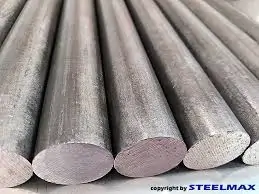
In the world of materials engineering and military procurement, specification codes such as MIL-S-6049 may sound like a string of bureaucratic letters and numbers but they represent decades of industrial standardization. MIL‑S‑6049 is a United States military specification that historically defined the requirements for a particular class of alloy steel alloy steel bars and stock used in demanding applications, especially in aircraft and defense hardware. Understanding this specification touches on metallurgy, military logistics, industry standards, and how older military standards have evolved into modern commercial equivalents.
What Is MIL‑S‑6049?
At its core, MIL‑S‑6049 is a military material specification that identifies the required physical and chemical properties of a steel alloy, specifically chrome‑nickel‑molybdenum (often designated as AISI 8740) steel bars and reforging stock intended to meet aircraft-quality standards. The spec detailed the composition, heat treatment, mechanical properties, and other controls necessary to produce material suitable for defense use.
The key alloy in MIL‑S‑6049, the SAE/AISI 8740 grade, is a medium‑carbon, low alloy steel strengthened with chromium, nickel, and molybdenum. This alloy offers a balance of toughness, strength, ductility, wear resistance, and hardenability, making it suitable for critical components such as shafts, gears, fittings, and other structural hardware.
Technical Scope of the Specification
MIL‑S‑6049 did not merely identify a metal type. It specified:
Chemical composition limits for the elements present (carbon, chromium, nickel, molybdenum, etc.);
Mechanical properties such as tensile strength and yield requirements appropriate for aircraft quality;
Heat treatment processes to achieve desired hardness and strength;
Physical and dimensional tolerances needed for reliable manufacturing and interchangeability in defense hardware.
Standards like MIL‑S‑6049 were written for use by government engineers, contractors, and manufacturers to ensure that materials delivered for Department of Defense (DoD) programs met exact performance criteria, particularly where failure could be catastrophic for example, in flight control linkages or landing gear components.
In procurement and inventory databases, the MIL‑S‑6049 designation often appears as a material document and classification reference for steel bars that are ultimately stocked with National Stock Numbers (NSN) for logistics and supply chain tracking. These records identify “STEEL, MIL‑S‑6049” as the controlling specification for round, hexagon, or flat bars of 8740 alloy steel.
Historical Evolution and Supersession
Initially published in the mid‑20th century, MIL‑S‑6049 became one of many military standards developed during and after World War II to codify quality requirements across the rapidly expanding defense industrial base. A formal revision, often known as MIL‑S‑6049A, was issued to update requirements and harmonize them with industry practices — but this document was itself eventually superseded.
By the late 20th century, many military specifications like MIL‑S‑6049 were canceled or replaced in favor of industry or consensus standards such as those published by SAE International (e.g., AMS 6322, AMS 6325, AMS 6327). These commercial standards often cover the same material grades and treatments but with broader acceptance in commercial manufacturing outside of strict military procurement.
This transition reflects a DoD policy shift toward using non-governmental standards when possible, to reduce redundancy and leverage broader industrial practice. MIL‑S‑6049 is an example of a specification that has corresponding voluntary or commercial standards but still holds historical significance for material traceability.
Application and Industry Relevance
Although MIL‑S‑6049 itself is no longer an active specification, its legacy lives on in how materials are specified and procured. Alloy steel bars meeting the original MIL‑S‑6049 criteria (AISI 8740) continue to be used widely in aerospace, automotive, and heavy machinery industries — whether under legacy military contracts or commercial equivalents like AMS or ASTM standards.
For example, components such as aircraft landing gear parts or structural fittings may still reference the alloy’s mechanical properties and quality criteria that were originally codified in MIL‑S‑6049. Manufacturers producing parts to this material today are more likely to cite commercial standards that mirror MIL requirements, but the underlying metallurgical principles remain consistent.
In the Defense Logistics Agency (DLA) supply chain, “MIL‑S‑6049” continues to appear in NSN records not because the spec is current, but because historical procurement and inventory records retain the reference point for material classification and traceability.
Why Military Specifications Still Matter
Even though many individual specs like MIL‑S‑6049 have been retired, military specifications as a category continue to play a role in defense acquisition. They:
Ensure interoperability across contractors and systems;
Define quality baselines that cannot be compromised in safety‑critical applications;
Anchor material traceability in logistics and maintenance systems for long‑lived platforms.
For engineers and supply managers working with legacy systems or in defense contracting, knowing the lineage of a specification like MIL‑S‑6049 helps ensure that materials meet the expectations of past and present contracts.
Conclusion
MIL‑S‑6049 stands as a representative example of mid‑20th-century military material specification: a detailed technical document designed to ensure that chrome‑nickel‑molybdenum (8740) alloy steel bars and stock used in aircraft and defense hardware met rigorous performance criteria. While the specification itself has been superseded in favor of commercial standards, its influence persists in procurement, inventory records, and the ongoing application of high-quality alloy steels in critical systems.
Understanding MIL‑S‑6049 offers insight into how military and industry standards evolve together from bespoke government guidelines toward broader consensus benchmarks while upholding the material quality essential to national defense and aerospace reliability.
Lastest Posts List
OEM & ODM
Highly precise technical design team,the design and production of tailored solutions for you.
Contact
Related Posts
Order Steel Plates Online with...

How to Find the Steel...
EN10025 S355J0W Weathering Steel Price...

Seasonal Pricing for Galvanized Strip...

Midwest Steel Supply Expands Footprint...
ASTM Standards Steel for Power...

Steel Fabrication for Power Infrastructure...

High Strength Steel for Transmission...
Steel Materials for Power Engineering...