


High-Temperature Resistant Alloy Bars and High-Speed Alloy Bars
Product Menu
- Steel Bar
- Powder High-speed Steel
- Aerospace Alloy Bar
- Aerospace Alloy Sheet
- Titanium Alloy Strip Coil/Sheet/Foil
- Titanium Alloy Pipe and Fitting
- Aluminum Strip Coil/Sheet
- Stainless Steel Strip Coil/Sheet
- Hot-rolled Steel Strip Coil/Sheet
- Cold-rolled Steel Strip Coil/Sheet
- Galvanized Steel Strip Coil/Sheet
- Color-coated Steel Strip Coil/Sheet
- Seamless Steel Pipe
- Welded Steel Pipe
- H-shaped Steel
- Angle Steel/Channel Steel
Advanced Materials for Extreme Industrial Performance
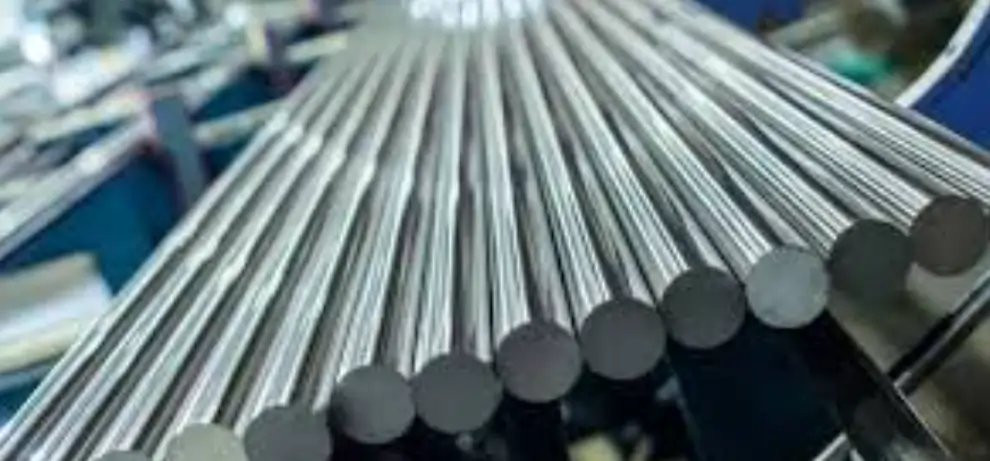
Modern industry relies heavily on materials that can operate reliably under extreme conditions. From aerospace engines and power plants to precision machining and tooling, conventional steels are often insufficient to meet rising performance demands. This is where high-temperature resistant alloy bars and high-speed alloy bars play a critical role. These specialized alloy products are engineered to deliver superior strength, durability, and stability in environments involving intense heat, stress, and wear.
This article explores the composition, properties, applications, and advantages of both high-temperature resistant alloy bars and high-speed alloy bars, highlighting their importance in advanced manufacturing and heavy industry.
Understanding Alloy Bars
Alloy bars are solid metal bars produced by alloying a base metal—typically iron—with carefully controlled amounts of other elements such as chromium, nickel, molybdenum, tungsten, vanadium, or cobalt. These added elements enhance mechanical and physical properties that cannot be achieved with plain carbon steel.
Alloy bars are commonly supplied in round, square, flat, or hexagonal forms and are manufactured through processes such as hot rolling, forging, and heat treatment. They serve as raw material for machining components that require high strength, wear resistance, thermal stability, or corrosion resistance.
Among the many alloy bar categories, high-temperature resistant alloys and high-speed alloys stand out for their ability to perform where ordinary metals fail.
High-Temperature Resistant Alloy Bars
Definition and Purpose
High-temperature resistant alloy bars are designed to maintain structural integrity, mechanical strength, and chemical stability when exposed to elevated temperatures over long periods. In many industrial environments, components are subjected to heat levels that would cause conventional steels to soften, oxidize, or deform. High-temperature alloys are engineered specifically to overcome these challenges.
These alloy bars are often produced from nickel-based, cobalt-based, or iron-nickel-chromium alloy systems. A well-known example is Inconel 718, which is widely used in extreme heat applications due to its excellent strength and creep resistance.
Key Material Characteristics
1. Strength Retention at Elevated Temperatures
Unlike standard steels, high-temperature resistant alloys maintain high tensile and yield strength even at temperatures exceeding 500°C. This property is essential in components that operate continuously under thermal stress, such as turbine shafts and furnace parts.
2. Creep Resistance
Creep is the gradual deformation of a material under constant load at high temperature. High-temperature alloy bars are specifically formulated to resist creep, ensuring dimensional stability and long service life in demanding environments.
3. Oxidation and Scaling Resistance
At high temperatures, many metals react rapidly with oxygen, forming scale that weakens the surface. High-temperature alloys contain elements such as chromium and aluminum that form stable protective oxide layers, preventing further degradation.
4. Thermal Fatigue Resistance
Components exposed to repeated heating and cooling cycles experience thermal fatigue. High-temperature alloy bars are designed to withstand these cycles without cracking or failure.
Common Applications
High-temperature resistant alloy bars are essential in industries where heat is an unavoidable operating condition:
Aerospace engines and gas turbines
Power generation equipment such as steam turbines and boilers
Petrochemical reactors and heat exchangers
Industrial furnaces and heat-treatment equipment
Automotive exhaust systems and turbocharger components
In these applications, failure is not an option. The reliability of high-temperature alloy bars directly impacts safety, efficiency, and operational cost.
High-Speed Alloy Bars
Definition and Purpose
High-speed alloy bars are primarily used in the manufacture of cutting tools and wear-resistant components. Most high-speed alloys fall under the category of high-speed steel (HSS)—a group of tool steels developed to retain hardness and cutting ability even at elevated temperatures generated during high-speed machining.
These alloys are heavily alloyed with elements such as tungsten, molybdenum, vanadium, and sometimes cobalt. The result is a material capable of cutting hard metals at high speeds without losing edge sharpness.
Key Material Characteristics
1. Hot Hardness (Red Hardness)
High-speed alloy bars retain hardness at temperatures where conventional tool steels soften. This allows cutting tools made from these alloys to operate at higher speeds and feeds, increasing productivity.
2. Exceptional Wear Resistance
The formation of hard carbides within the microstructure gives high-speed alloys excellent resistance to abrasive and adhesive wear. This is critical for tools that experience constant friction during machining.
3. Balanced Toughness
Despite their high hardness, high-speed alloys maintain sufficient toughness to resist chipping and cracking under impact loads. This balance is essential for tools subjected to intermittent cutting or vibration.
4. Heat-Treatability
High-speed alloy bars can be heat-treated to tailor hardness and toughness for specific applications. This flexibility allows manufacturers to optimize performance for different cutting conditions.
Common Applications
High-speed alloy bars are most commonly used as raw material for precision tools and wear-resistant components, including:
Drills, end mills, taps, and reamers
Cutting inserts and broaches
Punches and dies for metal forming
Gear-cutting and shaping tools
Precision components exposed to high friction
In manufacturing environments where speed, accuracy, and tool life are critical, high-speed alloy bars provide a significant competitive advantage.
Comparison: High-Temperature vs. High-Speed Alloy Bars
Although both types of alloy bars are engineered for extreme conditions, their purposes differ:
High-temperature resistant alloy bars focus on maintaining strength and stability under sustained heat and load.
High-speed alloy bars prioritize hardness, wear resistance, and performance under friction and rapid motion.
In some applications, components may require both thermal resistance and wear resistance, but typically one category dominates based on operating conditions.
Manufacturing and Processing Considerations
Both high-temperature and high-speed alloy bars require advanced metallurgical control during production. Precise alloying, controlled forging, and carefully designed heat-treatment processes are essential to achieving the desired properties.
Machining these alloys also requires specialized techniques, as their strength and hardness can be challenging for standard tooling. However, the performance benefits gained in service far outweigh the added complexity in processing.
Importance in Modern Industry
As industries push toward higher efficiency, higher operating temperatures, and faster production speeds, the demand for advanced alloy materials continues to grow. High-temperature resistant alloy bars enable safer and more efficient energy systems, while high-speed alloy bars drive productivity and precision in manufacturing.
Together, these materials support innovation across aerospace, energy, automotive, and industrial tooling sectors. Their continued development plays a key role in meeting future performance, sustainability, and reliability goals.
Conclusion
High-temperature resistant alloy bars and high-speed alloy bars represent two of the most important classes of advanced metallic materials in modern engineering. One excels in environments dominated by extreme heat and sustained stress, while the other thrives under rapid motion, friction, and wear. By selecting the appropriate alloy bar for a given application, manufacturers can achieve longer service life, higher efficiency, and greater operational reliability.
Lastest Posts List
OEM & ODM
Highly precise technical design team,the design and production of tailored solutions for you.
Contact
Related Posts
Order Steel Plates Online with...
How to Find the Steel...
EN10025 S355J0W Weathering Steel Price...
Seasonal Pricing for Galvanized Strip...
Midwest Steel Supply Expands Footprint...
ASTM Standards Steel for Power...
Steel Fabrication for Power Infrastructure...

High Strength Steel for Transmission...
Steel Materials for Power Engineering...