


API 5L X60/X70/X80 Structural Steel: Strength, Standards, and Applications
Product Menu
- Steel Bar
- Powder High-speed Steel
- Aerospace Alloy Bar
- Aerospace Alloy Sheet
- Titanium Alloy Strip Coil/Sheet/Foil
- Titanium Alloy Pipe and Fitting
- Aluminum Strip Coil/Sheet
- Stainless Steel Strip Coil/Sheet
- Hot-rolled Steel Strip Coil/Sheet
- Cold-rolled Steel Strip Coil/Sheet
- Galvanized Steel Strip Coil/Sheet
- Color-coated Steel Strip Coil/Sheet
- Seamless Steel Pipe
- Welded Steel Pipe
- H-shaped Steel
- Angle Steel/Channel Steel
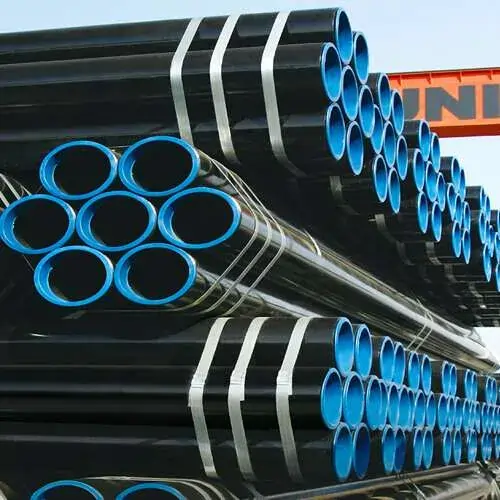
API 5L X60, X70, and X80 are high-strength steel grades widely used in the construction of pipelines and structural applications. These grades are governed by the American Petroleum Institute (API) 5L standard, and they serve industries like oil & gas, infrastructure, and heavy construction.
Companies like Midwest Steel that work with such high-grade structural steel must understand the technical specifications, applications, and handling challenges associated with these materials.
What is API 5L?
API 5L is the internationally recognized specification for steel pipe used in transporting oil, gas, and water in the pipeline industry. It defines the mechanical properties, chemical composition, manufacturing methods, and testing standards for line pipes.
Key Features of API 5L
Covers seamless and welded steel pipes
Includes Product Specification Levels (PSL1 and PSL2)
Supports a wide range of strength grades: from Grade B to X100
Used primarily for pipeline transportation systems
Understanding X60, X70, and X80 Grades
The “X” in these steel grades refers to the minimum yield strength of the material. Each grade offers increased strength and toughness compared to lower grades.
| Grade | Yield Strength (min) | Tensile Strength (min) |
|---|---|---|
| X60 | ~415 MPa (60,000 psi) | ~520 MPa |
| X70 | ~485 MPa (70,000 psi) | ~570 MPa |
| X80 | ~555 MPa (80,000 psi) | ~625 MPa |
These properties make them suitable for high-pressure, high-temperature environments and long-distance pipelines.
Chemical Composition and Mechanical Properties
Chemical Composition (Typical)
Carbon (C): Kept low to improve weldability
Manganese (Mn): Improves tensile strength
Sulfur (S) & Phosphorus (P): Minimized for toughness
Micro-alloying Elements: Niobium, Vanadium, and Titanium may be added for enhanced strength and impact resistance
Mechanical Requirements (PSL2)
PSL2 products require additional mechanical tests such as:
Charpy impact testing
Hardness testing
More stringent dimensional tolerances
Improved notch toughness
PSL1 vs PSL2 – What’s the Difference?
API 5L steel grades are categorized under two product specification levels:
PSL1
Basic requirements for line pipe
Less rigorous mechanical and chemical standards
Suitable for non-critical applications
PSL2
Stricter chemical and mechanical requirements
Requires impact toughness testing
More suitable for harsh environments (e.g., sour gas, cold climates)
For critical infrastructure or oil & gas pipelines, PSL2 is typically the preferred choice.
Applications of X60/X70/X80 Steel
These high-strength grades serve in a variety of demanding applications:
Oil & Gas Pipelines
Transport crude oil, natural gas, and refined products
Used in onshore and offshore pipeline systems
Structural Supports
High-load-bearing structures
Towers, bridges, and deep foundation components
Offshore Platforms
Marine structures exposed to corrosive environments
Require high toughness and resistance to cracking
Manufacturing Methods
API 5L line pipes can be manufactured using different methods depending on the grade and application:
Seamless Pipe
Made without welds
Preferred for high-pressure applications
ERW (Electric Resistance Welded)
Common for medium-diameter pipes
Economical and efficient for large-scale production
SAW (Submerged Arc Welded)
Ideal for large-diameter and thick-wall pipes
High weld quality and strength
Advantages of High-Grade API 5L Steel
1. High Strength-to-Weight Ratio
Higher strength grades like X70 and X80 allow for thinner pipe walls while maintaining pressure resistance. This reduces material cost and transportation weight.
2. Excellent Weldability
Despite their strength, API 5L steels are designed for efficient and safe welding, essential for long pipelines and structural assembly.
3. Enhanced Durability
Superior corrosion resistance, especially when combined with coatings like 3LPE or FBE, ensures a long service life in harsh environments.
Challenges and Considerations
1. Welding Challenges
Higher strength grades require strict welding procedures to prevent cracking or reduced toughness.
2. Cost Factors
Grades like X80 are more expensive due to the alloying elements and strict testing. Over-specifying the steel can lead to unnecessary project costs.
3. Toughness in Cold Weather
Projects in low-temperature environments (e.g., Canada, North Dakota) require materials that maintain ductility and impact resistance under freezing conditions.
4. Inspection and Quality Control
For PSL2 grades, extensive testing and documentation are mandatory. This includes impact testing, non-destructive testing (NDT), and third-party verification.
Midwest Steel’s Role in Supplying API 5L Steel
Midwest Steel and similar suppliers play a critical role in the pipeline and infrastructure industries by:
Sourcing certified material from reputable mills
Ensuring traceability and quality control
Offering value-added services like custom lengths, beveling, and coatings
Providing technical guidance on welding, fabrication, and installation
Their expertise ensures that contractors receive steel that meets both specification and performance requirements.
When to Choose X60, X70, or X80?
Choose X60 When:
Operating pressures are moderate
Cost is a concern
Weldability and toughness are needed without extreme demands
Choose X70 When:
Higher pressures and temperatures are present
Longer pipeline spans require extra strength
Better resistance to cracking is needed
Choose X80 When:
You need maximum strength and performance
Weight savings and pressure ratings are crucial
You’re working in critical infrastructure or offshore projects
Final Thoughts
API 5L X60, X70, and X80 structural steel grades offer excellent strength, toughness, and versatility for a wide range of demanding applications. Whether it’s building pipelines across vast landscapes or constructing offshore platforms, these grades are engineered for performance.
Companies like Midwest Steel that supply or fabricate API 5L steel must understand the unique characteristics, benefits, and limitations of each grade to ensure project success.
Need Help Choosing the Right API 5L Steel?
If you’re planning a pipeline or structural project and need expert advice on which API 5L grade to use, consult a trusted supplier like Midwest Steel. Their technical team can help you balance cost, strength, and compliance for your specific needs.
Lastest Posts List
OEM & ODM
Highly precise technical design team,the design and production of tailored solutions for you.
Contact
Related Posts
Order Steel Plates Online with...
How to Find the Steel...
EN10025 S355J0W Weathering Steel Price...
Seasonal Pricing for Galvanized Strip...
Midwest Steel Supply Expands Footprint...
ASTM Standards Steel for Power...
Steel Fabrication for Power Infrastructure...
High Strength Steel for Transmission...
Steel Materials for Power Engineering...