



AMS2301 Understanding Aircraft-Quality Steel Cleanliness Standards
Product Menu
- Steel Bar
- Powder High-speed Steel
- Aerospace Alloy Bar
- Aerospace Alloy Sheet
- Titanium Alloy Strip Coil/Sheet/Foil
- Titanium Alloy Pipe and Fitting
- Aluminum Strip Coil/Sheet
- Stainless Steel Strip Coil/Sheet
- Hot-rolled Steel Strip Coil/Sheet
- Cold-rolled Steel Strip Coil/Sheet
- Galvanized Steel Strip Coil/Sheet
- Color-coated Steel Strip Coil/Sheet
- Seamless Steel Pipe
- Welded Steel Pipe
- H-shaped Steel
- Angle Steel/Channel Steel
In aerospace, defense, and other high-performance AMS2301 engineering fields, the quality of materials can make the difference between reliability and catastrophic failure. One standard that plays a critical role in ensuring material integrity is AMS2301. Though it may appear as just a code, AMS2301 defines the cleanliness and inspection requirements for aircraft-quality steels, guiding manufacturers and inspectors in producing and verifying components that meet the highest safety standards.
What Is AMS2301?
AMS2301 is a material specification standard that focuses on steel cleanliness and defect inspection. Unlike a product specification, it does not define the chemical composition or mechanical properties of steel; instead, it specifies the procedures and criteria for detecting flaws such as cracks, inclusions, and other imperfections that could compromise the steel’s performance in critical applications.
The standard primarily applies to ferromagnetic steels used in aerospace structures, including landing gear, shafts, fasteners, and other components that undergo significant stress. AMS2301 provides detailed guidance on non-destructive testing methods, especially magnetic particle inspection (MPI), ensuring that steel is free from hidden defects or that defects fall within acceptable limits.
Why Steel Cleanliness Matters
Steel cleanliness refers to the absence of internal defects and inclusions that cannot be seen with the naked eye. Even small imperfections can grow under repeated stress, leading to cracks, fatigue, or sudden failure. In aerospace applications, where components are subjected to extreme loads and temperatures, these defects pose significant safety risks. By setting strict cleanliness criteria, AMS2301 helps manufacturers ensure that the steel used in aircraft and other high-reliability components is structurally sound.
Magnetic Particle Inspection (MPI) and AMS2301
The core of AMS2301 is the magnetic particle inspection process, a widely used non-destructive testing technique. MPI works as follows:
The steel part is magnetized.
A magnetic field is established throughout the material.
Fine magnetic particles are applied to the surface.
Any disruptions in the magnetic field, caused by cracks or defects, attract the particles, making the flaws visible.
This method allows inspectors to detect surface and near-surface discontinuities without damaging the part. AMS2301 specifies the procedures, acceptance criteria, and documentation for MPI, ensuring consistent evaluation of steel quality across different manufacturers and suppliers.
Evolution of the Standard
AMS2301 has evolved over several decades to incorporate advances in inspection technologies and industrial practices. Different revisions of the standard, denoted by suffixes such as AMS2301A, AMS2301D, and AMS2301F, refine inspection procedures, update acceptance criteria, and expand the types of steel covered. The iterative updates reflect the ongoing importance of material reliability in aerospace and other high-stakes industries.
Applications of AMS2301
AMS2301 applies to various steel forms, including:
Blooms and billets
Bars, sheets, and plates
Tubes and extrusions
Forging stock
These materials form the basis of critical components that must withstand extreme mechanical stress, thermal cycling, and fatigue. By ensuring that the raw materials meet AMS2301 standards, manufacturers can produce parts that perform reliably in demanding conditions.
Implementing AMS2301 in Practice
Compliance with AMS2301 requires a structured quality assurance program. This includes:
Documented inspection procedures that align with the standard.
Trained personnel certified in non-destructive testing methods.
Record-keeping of inspection results to demonstrate conformity.
Traceability, linking finished components back to the inspected raw materials.
For aerospace and defense companies, maintaining AMS2301 compliance is not just a technical requirement but also a contractual and safety obligation.
AMS2301 and Industry Certification
Adherence to AMS2301 often supports broader quality management certifications, such as AS9100, which governs aerospace manufacturing. Companies that demonstrate consistent compliance with AMS2301 can build trust with clients and regulators, signaling that their components meet the rigorous standards necessary for flight and high-performance applications.
Common Misunderstandings
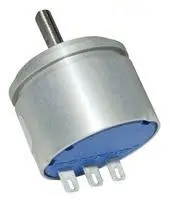
It is important to note that AMS2301 is not an electronic component or a sensor, despite similarities in naming conventions with other products in different industries. AMS2301 exclusively addresses steel cleanliness and inspection standards for aerospace and high-reliability engineering.
Conclusion
AMS2301 plays a crucial role in aerospace and high-performance engineering by setting rigorous standards for steel cleanliness. It ensures that steel components, which form the backbone of critical machinery and aircraft, are free from defects that could compromise safety or performance. By defining magnetic particle inspection procedures and acceptance criteria, AMS2301 provides a trusted framework for manufacturers, inspectors, and quality managers to guarantee material integrity.
In industries where failure is not an option, AMS2301 acts as a safeguard, helping engineers deliver components that perform reliably under extreme conditions. Understanding and applying AMS2301 is therefore essential for anyone involved in aerospace steel manufacturing, inspection, or quality assurance.
Lastest Posts List
OEM & ODM
Highly precise technical design team,the design and production of tailored solutions for you.
Contact
Related Posts
Order Steel Plates Online with...
How to Find the Steel...
EN10025 S355J0W Weathering Steel Price...
Seasonal Pricing for Galvanized Strip...
Midwest Steel Supply Expands Footprint...
ASTM Standards Steel for Power...
Steel Fabrication for Power Infrastructure...

High Strength Steel for Transmission...
Steel Materials for Power Engineering...