


Aluminum bronze alloy bars Properties, Applications, and Advantages
Product Menu
- Steel Bar
- Powder High-speed Steel
- Aerospace Alloy Bar
- Aerospace Alloy Sheet
- Titanium Alloy Strip Coil/Sheet/Foil
- Titanium Alloy Pipe and Fitting
- Aluminum Strip Coil/Sheet
- Stainless Steel Strip Coil/Sheet
- Hot-rolled Steel Strip Coil/Sheet
- Cold-rolled Steel Strip Coil/Sheet
- Galvanized Steel Strip Coil/Sheet
- Color-coated Steel Strip Coil/Sheet
- Seamless Steel Pipe
- Welded Steel Pipe
- H-shaped Steel
- Angle Steel/Channel Steel
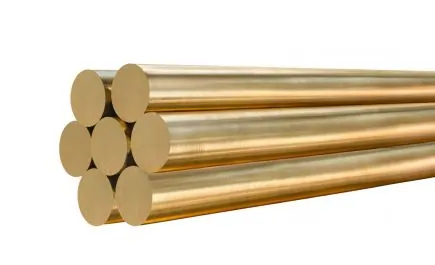
Aluminum bronze alloy bars are widely used in industrial and engineering applications due to their exceptional mechanical strength, corrosion resistance, and durability. These copper-based alloys, primarily alloyed with aluminum, offer a unique combination of properties that make them suitable for demanding environments such as marine, aerospace, oil and gas, and heavy manufacturing industries. As industries continue to seek materials that perform reliably under extreme conditions, aluminum bronze alloy bars have become an increasingly popular choice.
What Are Aluminum Bronze Alloy Bars?
Aluminum bronze alloy bars are solid metal bars made from copper alloys containing aluminum as the main alloying element, typically ranging from 5% to 12% aluminum. In addition to aluminum, small amounts of elements such as iron, nickel, manganese, or silicon may be added to enhance specific properties like strength, wear resistance, or toughness.
These alloy bars are produced through casting, extrusion, or forging processes and are available in various shapes and sizes, including round, square, hexagonal, and rectangular bars. Their versatility allows them to be machined into a wide range of components used across multiple industries.
Key Properties of Aluminum Bronze Alloy Bars
One of the most notable characteristics of aluminum bronze alloy bars is their outstanding corrosion resistance. Unlike many other copper alloys, aluminum bronze forms a thin, protective aluminum oxide layer on its surface, which shields the material from oxidation and chemical attack. This makes it particularly effective in marine and saltwater environments.
Another important property is high mechanical strength. Aluminum bronze alloys are significantly stronger than pure copper and many other bronze alloys. They maintain their strength even at elevated temperatures, making them suitable for high-stress and high-temperature applications.
Aluminum bronze alloy bars also exhibit excellent wear and abrasion resistance. This property is especially valuable in applications involving friction, sliding contact, or heavy loads. Additionally, these alloys have good fatigue resistance, which contributes to a longer service life for components subjected to repeated stress cycles.
Other beneficial properties include non-sparking behavior, low magnetic permeability, and good thermal and electrical conductivity compared to steel. These features make aluminum bronze alloy bars suitable for use in hazardous or sensitive environments.
Common Applications of Aluminum Bronze Alloy Bars
Due to their exceptional properties, aluminum bronze alloy bars are used in a wide range of industries. In the marine industry, they are commonly used to manufacture propeller shafts, valves, pump components, and seawater fittings because of their resistance to seawater corrosion and biofouling.
In the oil and gas sector, aluminum bronze alloy bars are used for components such as valve stems, bearings, bushings, and connectors that must withstand corrosive fluids, high pressure, and harsh operating conditions. Their non-sparking nature also makes them ideal for use in explosive or flammable environments.
The aerospace and defense industries utilize aluminum bronze alloy bars for landing gear components, bushings, and fasteners due to their high strength-to-weight ratio and fatigue resistance. Similarly, in heavy machinery and manufacturing, these alloy bars are used to produce gears, worm wheels, wear plates, and structural components that require high load-bearing capacity and durability.
Advantages Over Other Materials
Compared to traditional bronze or brass, aluminum bronze alloy bars offer superior strength and corrosion resistance. When compared to steel, they provide better resistance to corrosion in aggressive environments and do not require additional surface treatments or coatings. Their non-magnetic and non-sparking properties further set them apart from ferrous materials.
Another advantage is their long service life. Components made from aluminum bronze alloy bars often require less maintenance and fewer replacements, resulting in lower long-term operating costs. Although the initial material cost may be higher than some alternatives, the overall lifecycle cost is often more economical.
Machinability and Fabrication
Aluminum bronze alloy bars are generally machinable, although they are harder than many other copper alloys. Proper tooling, cutting speeds, and lubrication are essential to achieve optimal results. With the right machining practices, these alloy bars can be accurately shaped into complex components with excellent surface finish.
They can also be welded and brazed using appropriate techniques, making them adaptable for various fabrication requirements. This flexibility adds to their appeal for custom and precision-engineered applications.
Conclusion
Aluminum bronze alloy bars are a high-performance material choice for industries that demand strength, reliability, and resistance to harsh environments. Their unique combination of mechanical, chemical, and physical properties makes them suitable for a wide range of critical applications, from marine and oil exploration to aerospace and industrial machinery.
Lastest Posts List
OEM & ODM
Highly precise technical design team,the design and production of tailored solutions for you.
Contact
Related Posts
Order Steel Plates Online with...
How to Find the Steel...
EN10025 S355J0W Weathering Steel Price...
Seasonal Pricing for Galvanized Strip...
Midwest Steel Supply Expands Footprint...
ASTM Standards Steel for Power...
Steel Fabrication for Power Infrastructure...

High Strength Steel for Transmission...
Steel Materials for Power Engineering...